Five Delivery Disciplines That Can Protect US Infrastructure Schedules in 2026
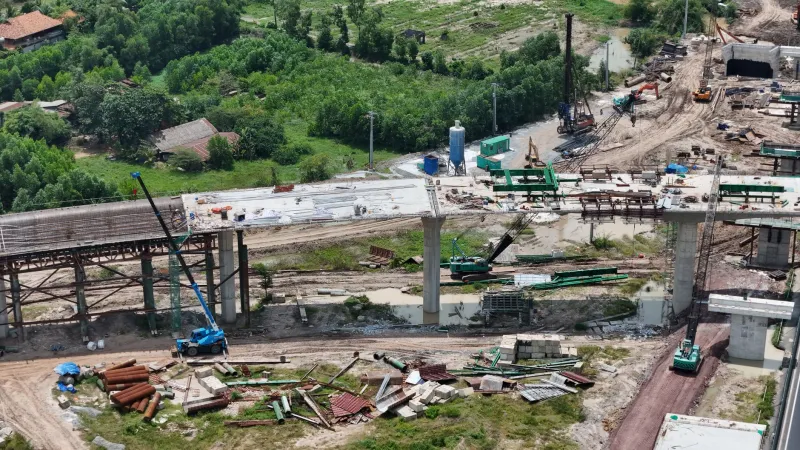
As of November 2026, the US infrastructure pipeline is shifting from award announcements to the harder work of delivery. State departments of transportation, water utilities, transit authorities, and energy owners are managing multiyear capital programs while confronting labor shortages, material volatility, utility conflicts, and public expectations for visible progress. The scale is different from a single giga-project, but the delivery problem is similar: how to keep thousands of interdependent decisions from becoming schedule risk.
Saudi Binladin Group’s experience on large-scale construction and program management suggests that giga-project discipline is not a matter of exotic technology. It is a matter of sequencing, supply-chain preparation, integrated information, disciplined governance, and early transition planning. For US infrastructure leaders, these five lessons offer a practical starting point in 2026.
1. Sequence for certainty, not only for speed
On complex sites, the critical path is often controlled by release points: when a utility relocates, when a foundation is accepted, when a systems package is ready for commissioning. Giga-project teams manage these interfaces as formal schedule instruments rather than informal coordination items. US programs can do the same.
A state DOT replacing a corridor of aging bridges, for example, can tie contractor incentives to completion of utility relocations and deck-pour windows, not only to overall milestone dates. A water utility expanding a treatment plant can sequence modular process trains so that existing operations remain stable while new capacity is tested. An energy owner can stage substation work around interconnection approvals and outage windows. The lesson is to design the construction sequence around the decisions and approvals that actually release work. Four-dimensional sequencing, which links the schedule to a model, can test lane closures, crane placements, and temporary works before they reach the field.
2. Localize supply chains without sacrificing quality
Giga-projects cannot rely on distant suppliers for every critical component. They qualify regional fabricators, pre-cast yards, aggregate sources, and specialty contractors early, then dual-source the items that could stop work. US agencies can adopt the same logic within existing procurement rules.
For transportation programs, that may mean prequalifying regional precast suppliers and steel fabricators before bridge packages are advertised. For water systems, it may mean stockpiling pipe, valves, and treatment components with vendor-managed inventory agreements. For transit and energy projects, it may mean qualifying signal, traction-power, and protection-and-control suppliers against realistic lead times. Localization is not protectionism; it is schedule insurance. It also supports compliance with domestic-content requirements when those requirements are planned into the procurement strategy rather than discovered after bid.
3. Treat the digital twin as a delivery tool, not a handover artifact
Many US owners commission digital twins for operations, then discover that the model was never used to manage construction. Giga-project practice points in the opposite direction: the common data environment should be the place where design, procurement, field progress, and commissioning information meet.
A transit authority can use a federated model to coordinate utility corridors, station finishes, and traffic staging. A water utility can connect hydraulic models to commissioning data so that new pump stations are validated against design intent. An energy program can use model-based progress tracking to confirm that cable trays, relays, and structural supports are installed in the right sequence. The digital twin does not need to be elaborate to be useful. It needs a clear owner, a defined data standard, and a decision log that shows what changed and why. If the model is not helping project managers make decisions, it is not yet a delivery tool.
4. Make stakeholder alignment a governed process
Large programs fail slowly through unresolved decisions. Giga-project teams counter this with standing decision boards that include the owner, designer, contractor, utilities, regulators, and affected operators. US programs can create similar forums with escalation clocks and written decision charters.
A transit extension that crosses municipal utility corridors needs more than periodic coordination meetings. It needs a standing board with authority to resolve relocation priorities within agreed time frames. An energy project facing interconnection studies needs a joint schedule with the regional transmission organization and the local utility. A water program serving multiple jurisdictions needs a charter that defines who approves rate impacts, land access, and operational outages. Stakeholder alignment is a schedule currency. When it is left informal, it becomes a source of delay that no construction manager can recover.
5. Plan commissioning and transition from the first design review
Giga-projects often invest heavily in systems integration because a late commissioning failure can erase years of construction progress. US infrastructure programs should apply the same discipline to bridges, treatment plants, transit systems, and substations.
That means readiness reviews at 30, 60, and 90 percent design; operator training that begins before substantial completion; spare-parts strategies that reflect actual maintenance regimes; and asset data handover that is tested, not merely promised. A bridge with intelligent transportation systems needs a transition plan for controllers, communications, and maintenance access. A water treatment plant needs valve schedules, isolation plans, and lab validation before operators take control. A substation needs protection settings and outage procedures integrated with the construction sequence. Commissioning is not a phase at the end of a program. It is a design requirement that should shape procurement, sequencing, and data handover from the start.
A practical path for 2026
US agencies do not need to reorganize entire capital programs to borrow these lessons. They can pilot them through procurement language, schedule requirements, and governance charters. They can require 4D sequencing on complex packages, qualify critical suppliers earlier, define digital-twin deliverables around specific decisions, establish decision boards with escalation rules, and add commissioning readiness to design reviews.
The common thread is that giga-project delivery is less about heroic effort than about disciplined interfaces. For US transportation, water, and energy programs in 2026, that discipline is a practical way to reduce schedule risk and cost overruns without waiting for a perfect model or a perfect procurement system.