No Crane, No Critical Path: Making Heavy-Lift Capacity a Pre-Bid Control
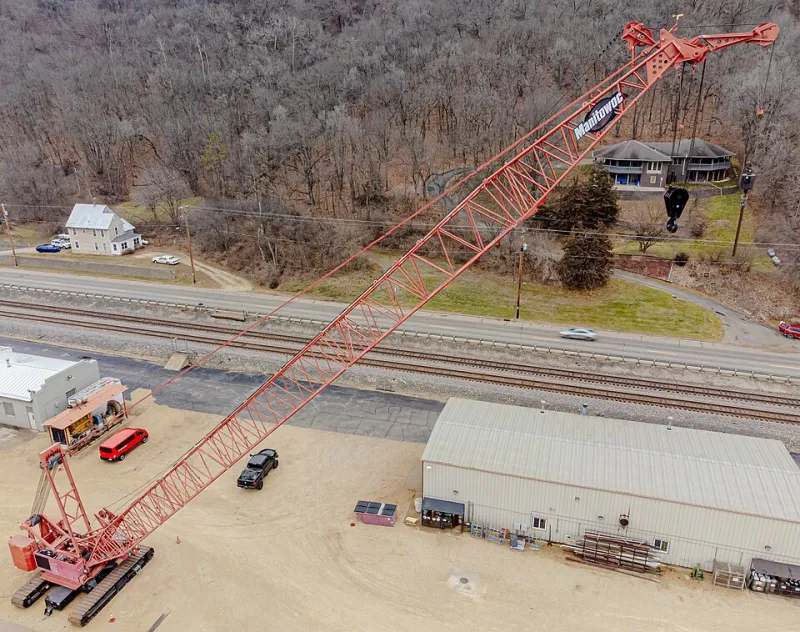
Photo: Wikideas1, CC0, via Wikimedia Commons
On a US bridge replacement, the bid package may run to hundreds of pages. Steel quantities are measured, concrete mixes are specified, surety capacity is tested, and subcontractor qualifications are reviewed. Yet the crane that will set the girders often appears only as a line in the construction approach, with little more detail than a tonnage figure and an assumption that the equipment will be available when needed.
That assumption is becoming harder to defend. Heavy-lift cranes are not a commodity to be sourced after award. They are production resources with calendars, transport constraints, assembly footprints, permit requirements, and specialized crews. When a project depends on a particular crane configuration, the availability of that configuration can set the sequence long before the first lift plan is approved.
The constraint is a calendar, not a catalog item
Heavy-lift equipment is often discussed as though capacity can be summoned from a national fleet. In practice, a crane that can make a lift on paper may be impractical to mobilize, assemble, and operate on a constrained US site. A large crawler crane may require a specific boom length, luffing jib, superlift counterweight, and ground-bearing arrangement. The same nominal tonnage in a different configuration may not serve the lift envelope at all.
Regional availability matters more than catalog ratings. In 2026, energy projects, data center campuses, port expansions, and bridge programs are competing for the same specialized fleets in several US markets. A crane listed in an equipment guide is not a commitment. A crane owned by a regional contractor is not automatically available to a new project. If the work requires a rare configuration or a narrow mobilization window, the schedule may be constrained before steel procurement is complete.
Four checks to run before pricing
The first check is duty and configuration. Confirm the required lift envelope, radius, boom and jib arrangement, ground-bearing pressure, and wind limits. Ask whether that configuration exists in the region and whether it can move under state heavy-haul rules. A crane that is technically capable but cannot travel the required route is not a viable option.
The second check is assembly and disassembly footprint. Crawler cranes need assembly pads, mats, tail-swing clearance, assist cranes, and laydown area. Urban interchanges, hospital sites, waterfront terminals, and active industrial plants may not have that space without temporary civil work. Underground utilities, slope stability, and adjacent rail or road operations can further constrain the pad. If the pad must be built, permitted, and restored, those activities belong in the bid schedule and price.
The third check is permit and outage windows. Oversize loads, road closures, bridge load ratings, railroad flags, utility de-energization, local curfews, and airport notification requirements can create hard windows for crane movement and operation. These are not administrative details. A permit delay can idle a crane, a crew, and the critical path at the same time.
The fourth check is people. Certified operators, riggers, lift directors, and assembly technicians are part of the capacity equation. A crane without an available crew is not available capacity. Specialty lift subcontractors should be asked to confirm not only equipment but also the personnel who will assemble, inspect, and operate it.
Put capacity on the risk register
A pre-bid risk register should carry heavy-lift capacity alongside steel availability, surety appetite, and utility risk. Useful line items include crane reservation options, mobilization and demobilization, assembly-pad civil works, permit durations, standby exposure, and the cost of an alternate lifting method. Each item should have an owner, a probability, a schedule impact, and a trigger date for decision.
This is not an argument for reserving equipment indiscriminately. It is an argument for pricing the difference between an assumption and a commitment. Where procurement rules allow, a pre-bid reservation or letter of intent can be structured as a qualification. Even when a formal reservation is not possible, the bid can state the basis of crane availability and identify the point at which the assumption must be confirmed.
What owners should require in proposals
Owners can make heavy-lift capacity visible without prescribing means and methods. Technical proposals can require a lift plan summary that identifies crane class, source, assembly footprint, permit matrix, operator credentials, and contingency. A pre-bid site visit that includes the proposed assembly area is often more useful than a paper review. Evaluation should test whether the proposed schedule is consistent with the equipment and permits described.
For construction-manager-at-risk and progressive design-build deliveries, heavy lift can be treated as an early trade package. That allows the team to secure capacity before design finalization while preserving competition on the lift plan. On low-bid work, owners can still require a conforming heavy-lift approach and reject proposals that rely on unspecified equipment.
What contractors should state in bids
Contractors should document assumptions plainly. If crane availability depends on a regional fleet window, say so. If the owner is responsible for the assembly pad, state the required dimensions and bearing capacity. If permits are by others, identify the windows that matter. Qualifications buried in an appendix do not help the project team make decisions.
Alternative methods deserve the same scrutiny. Hydraulic gantries, strand jacking, and modularization can reduce crane dependence, but they introduce their own transport, foundation, and permit constraints. The comparison should be made before bid submission, not after the preferred crane proves unavailable.
Heavy lift is not a construction-phase detail. It is a pre-bid capacity decision. In a tight US market, the crane that is not reserved is not a contingency. It is a schedule risk with a boom.