The Fifth Transformer: Making Interchangeability a Pre-Bid Design Standard
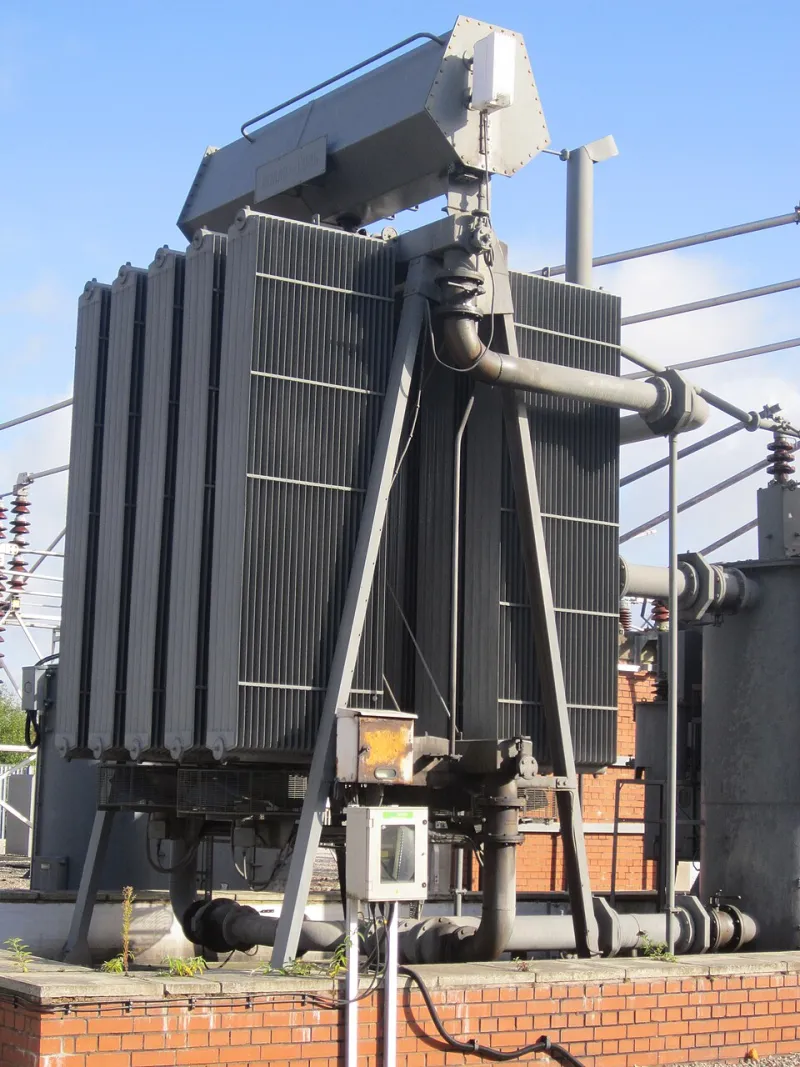
Photo: Rept0n1x, CC BY-SA 3.0, via Wikimedia Commons
For much of the past decade, spare electrical equipment occupied a modest place in US infrastructure delivery: a maintenance line item, a warehouse decision, or an owner's afterthought once the project team had demobilized. The long lead times that surfaced across transformers, switchgear, and protective relays between 2021 and 2023 changed that calculation. By 2026, the constraint is no longer a temporary disruption to be waited out. It is a structural condition that capital programs must design around.
The practical response is not to stockpile equipment indiscriminately. It is to make interchangeability a design standard and to treat strategic spares as a pre-bid delivery variable. The difference matters. A spare that fits only one project, one manufacturer, and one protection scheme is not a resilience asset. It is an expensive piece of immobilized capital.
A Spare Is Not a Spare If It Is Bespoke
Electrical equipment packages are often developed project by project, with ratings, physical envelopes, relay settings, and communication protocols tailored to a single site. That approach can optimize an individual design, but it undermines the owner's ability to move equipment across a portfolio when a failure occurs or a schedule slips. A transformer sitting in a warehouse is useful only if its impedance, voltage ratio, cooling class, and bus configuration allow it to be substituted without a redesign.
Owners should define an equipment family before soliciting bids. That family can establish common ratings, standardized protection interfaces, and compatible physical dimensions across a program. It need not force every facility into an identical design. It should, however, create a documented envelope within which a spare can serve more than one location. Bidders can then compete on how well they meet that standard, rather than on how narrowly they can customize the package.
Pricing Resilience as a Separate Bid Line
Spare equipment is frequently absorbed into a general electrical allowance or deferred to operations. Both practices obscure cost and weaken accountability. A better approach is to require a distinct bid line for strategic spares, with quantities, delivery dates, acceptance criteria, storage obligations, and warranty terms stated explicitly. This does not inflate the base scope. It makes the resilience component visible and comparable.
For US public owners, the evaluation method should also be explicit. If a bid includes a spare transformer, evaluators need to know whether the unit is interchangeable with the program standard, whether it is factory-tested before shipment, and whether the contractor or the owner holds title and storage risk. These details belong in the solicitation, not in post-award negotiation. When they are priced separately, owners can decide whether to buy one spare for a single project or contribute to a program-level reserve.
The Program Pool Alternative
A single project may not justify a full spare unit. A portfolio often can. Owners with several substations, pump stations, or transit facilities should consider a shared spare pool governed by common specifications and a central inventory. The pool can be sized against criticality, failure probability, and the longest lead time in the equipment family. It can also be tested and maintained on a scheduled basis rather than left idle until an emergency.
Pooling introduces governance questions. Who pays for the initial unit? Who funds testing and storage? How is the spare allocated when two projects need it at once? These questions are easier to answer before procurement than after a failure. A program delivery office can formalize the rules in an internal service agreement or an owner-controlled insurance program, depending on the organization. The key is to move spare-equipment strategy from an informal understanding to a documented delivery control.
Storage and Testing Are Part of the Asset
A spare that is not maintained is only a deferred failure. Transformers require oil testing, moisture control, and periodic inspection. Switchgear requires clean, climate-controlled storage and protection against pests and corrosion. Relays and controls may require firmware management and cybersecurity updates before they can be energized. If these obligations are not assigned in the contract, they tend to fall between the contractor, the maintenance team, and the owner's warehouse.
Solicitations should require a storage and preservation plan for every strategic spare. The plan should identify the responsible party, the storage environment, the testing interval, and the acceptance process at handover. For digitally enabled equipment, it should also address software versions and access controls. A spare that cannot be safely commissioned because its firmware is obsolete is not a spare. It is a future retrofit.
A Pre-Bid Checklist for 2026 Packages
Owners preparing electrical packages in 2026 can use a short set of questions to test whether resilience is designed in or bolted on:
- Have we identified the critical electrical equipment families across the program, not just the project?
- Do the specifications define interchangeable ratings, protection interfaces, and physical envelopes?
- Is the strategic spare a separate bid line with clear quantities and acceptance criteria?
- Have we decided whether the spare is project-specific or part of a program pool?
- Are storage, testing, warranty, and title transfer assigned before award?
- Does the evaluation method reward compliance with the interchangeability standard?
The answers will not eliminate lead-time risk. They will, however, prevent owners from discovering that their spare equipment is unavailable, incompatible, or unmaintained at the moment it is needed. In a capital program, resilience is not a warehouse decision made after completion. It is a design decision made before the bid clock starts.