Before the First Cut: Stormwater Authorization as a Bid-Stage Sequencing Constraint
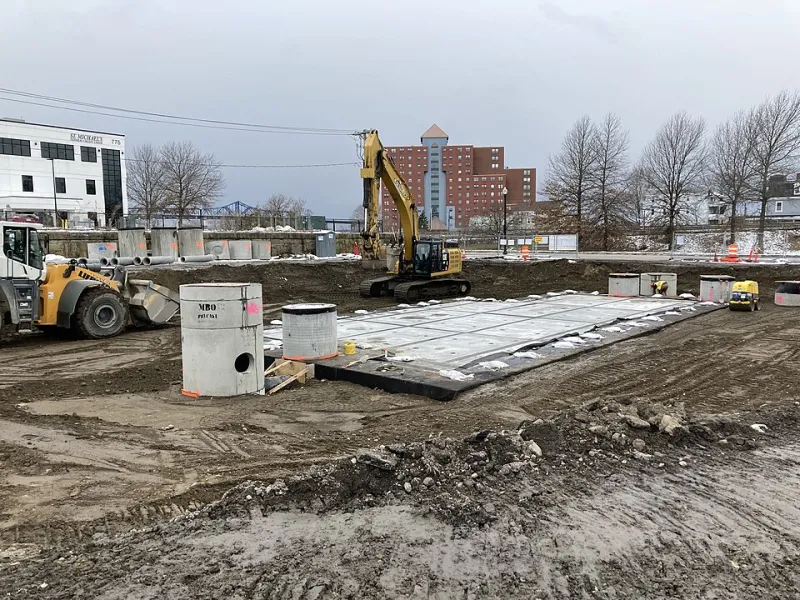
Photo: MassDOT, Public domain, via Wikimedia Commons
The Permit Is a Production Gate
On many US construction programs, the stormwater package arrives at the pre-bid table as an appendix: a draft Stormwater Pollution Prevention Plan, a reference to Construction General Permit coverage, and an assumption that authorization will follow mobilization in the ordinary course. That framing is administratively convenient and operationally fragile. For projects whose early production is earthwork, the stormwater permit is not a compliance formality that runs alongside the schedule. It is a weather-sensitive gate that can hold the first cut, shape the inspection calendar, and force corrective-action work into the same finite crew-days already committed to grading and utilities.
The distinction matters most in public works and large private programs where state-issued Construction General Permit coverage, National Pollutant Discharge Elimination System obligations, and local municipal separate storm sewer system requirements intersect. A Notice of Intent may be filed, but coverage is not automatic. A Stormwater Pollution Prevention Plan may be drafted, but it must be site-specific, reviewed, and implemented before discharges occur. Inspectors may be assigned, but their frequency depends on permit conditions, qualifying rain events, and the project’s risk category. Each of these steps has duration, predecessor logic, and uncertainty. None belongs in a bid as an asterisk.
Reading Authorization as a Schedule Network
A pre-bid stormwater review should begin by converting permit requirements into a small network of activities rather than a single “permits” line. The first activity is usually the submittal and review path for the Notice of Intent or state equivalent, including any completeness review by the issuing agency. The second is SWPPP development and approval, which depends on final site layout, grading plans, drainage design, and the selection of erosion and sediment controls. The third is installation of the initial control set: perimeter controls, stabilized construction entrances, sediment basins or traps, and any required discharge points. Only after those activities can the project credibly represent that earthwork is authorized to begin.
That network should carry realistic durations. Agency review times vary by state and by workload, and they are not reliably compressed by bid urgency. SWPPP review may require coordination with the design team, the contractor’s environmental staff, and the owner’s representative. Initial control installation depends on access, materials, and weather. A bid that assumes these steps can be collapsed into the mobilization period is effectively transferring an unquantified delay risk to the contractor without pricing it.
The schedule logic should also distinguish between authorization to disturb soil and authorization to discharge. Some projects can install controls under a limited notice while final coverage is pending; others cannot. The pre-bid assumptions should state which pathway is available, who owns the risk if it is not, and what the schedule consequence is if coverage arrives later than planned.
Seasonal Windows and Discharge Limits
Stormwater constraints are not uniform across the US. In parts of the Pacific Northwest, prolonged wet seasons can make erosion-control effectiveness and discharge quality the dominant early-work variables. In the Chesapeake Bay watershed and other areas with total maximum daily load requirements, discharge limits may impose additional monitoring, sampling, or treatment obligations. In arid regions, the risk may shift from continuous rainfall to high-intensity events and dust control. A bid that treats “stormwater” as a generic line item misses the geographic specificity that drives both cost and sequence.
Seasonal restrictions deserve explicit treatment. Some permits or local ordinances limit earth-disturbing activity during certain months, impose stricter inspection regimes during wet weather, or require additional stabilization before seasonal shutdown. If the project’s early schedule depends on opening a large cut during a period when discharge restrictions are most restrictive, the bid should identify that collision before award. The alternative is a schedule that appears achievable in the bid room and becomes a corrective-action log in the field.
Inspection Cadence and Corrective-Action Float
Permit-required inspections consume production time. The cadence may be based on a fixed interval, a qualifying rain event, or both. The inspection itself is not the only cost; the corrective-action window that follows is often the more consequential schedule variable. If an inspector identifies a damaged silt fence, an unstable construction entrance, or a sediment basin that needs cleaning, the permit may require repair within a defined period. That work competes with the same labor and equipment needed for grading.
A pre-bid schedule should therefore include inspection and maintenance as recurring activities, not as incidental tasks. The estimate should identify who performs inspections, whether that person is dedicated or shared, and how corrective actions are prioritized against production. It should also establish a reasonable float for corrective-action windows. A project that plans zero float for stormwater maintenance is planning to fail an inspection at the worst possible moment.
Bid Assumptions That Survive Contact With Weather
The most useful bid assumptions are specific enough to be tested. Instead of stating that the contractor will “comply with all stormwater requirements,” the pre-bid package should record the assumed permit pathway, the anticipated agency review duration, the required initial control set, the inspection frequency, the corrective-action standard, and the seasonal restrictions that apply. It should state who prepares the SWPPP, who certifies it, and who bears the cost of redesign if the agency rejects the first submittal.
Risk allocation should follow control. The owner typically controls site layout and design decisions that determine the SWPPP; the contractor controls means and methods of installation and maintenance. A clear pre-bid allocation can separate design-related permit risk from operational compliance risk. Where the owner requires a specific accelerated earthwork start, the bid should identify the premium for expedited submittals, additional inspection resources, or enhanced controls needed to support that start.
A Practical Pre-Bid Checklist
For 2026 programs, a disciplined stormwater pre-bid review can be organized around five questions. First, what is the actual authorization pathway, and how long has it taken recently for comparable projects in this jurisdiction? Second, what site-specific controls must be installed before soil disturbance, and do they depend on access or offsite work? Third, what inspection cadence and corrective-action windows will the permit impose, and who will resource them? Fourth, do seasonal discharge restrictions collide with the planned earthwork sequence? Fifth, what assumptions and exclusions are documented in the bid so that later changes can be priced rather than absorbed?
Stormwater compliance is not a parallel administrative process. It is a production constraint with weather exposure, agency dependency, and recurring labor demand. Treating it as a pre-bid schedule item does not weaken environmental performance; it makes the schedule honest. The first cut should wait for the permit because the plan says so — not because the paperwork was discovered after mobilization.