Wide Load, Narrow Window: Underwriting Oversize Freight Before the Bid Is Let
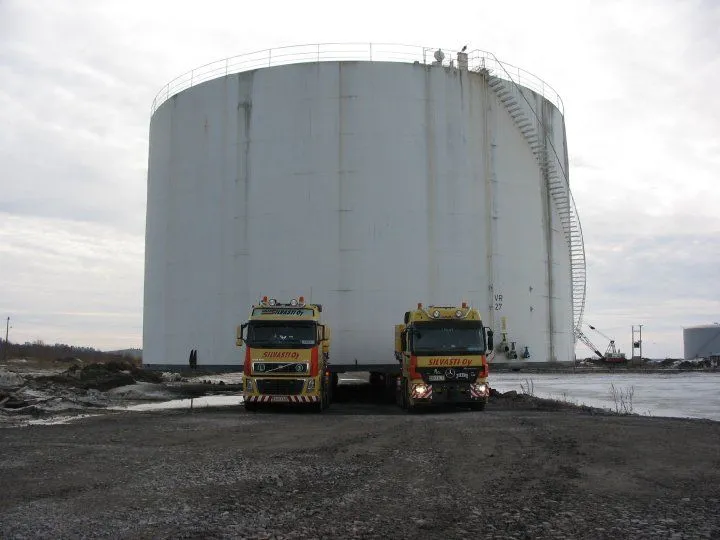
Photo: Esa, CC BY-SA 3.0, via Wikimedia Commons
A bridge girder can be fabricated to tolerance, inspected, and released for shipment, and still sit at the yard because a state permit office has not issued the movement authorization, an escort vehicle is unavailable, or a bridge on the only viable route has a load rating that will not support the move. For US infrastructure programs, that sequence is not an exception. It is a recurring schedule condition that bid teams frequently bury inside a logistics allowance rather than treat as a production constraint.
The result is familiar: the crane is mobilized, the erection crew is on standby, and the critical path is waiting on a load that cannot legally move. The fix begins before bid day, not after award.
The permit is a production constraint, not a paperwork task
Oversize and overweight movements in the United States are governed by a patchwork of state DOT permit regimes, each with its own application requirements, review timelines, escort thresholds, curfew restrictions, and seasonal limits. A load that is routine in one state may require a superload permit, engineering review of bridge structures, utility clearance coordination, and police escorts in another. Some jurisdictions restrict movements during peak travel hours, holiday periods, or spring weight restrictions. Others require route surveys or proof of insurance before a permit is issued.
Those requirements do not simply add administrative time. They define the window in which the load can move. If the window is narrower than the fabrication and erection sequence assumes, the schedule is wrong at the moment it is submitted.
Build the register before the bid is priced
A route-and-permit register is the minimum pre-bid instrument for any program with major oversize components: bridge girders, transformers, prefabricated modules, tunnel segments, or heavy mechanical equipment. The register should be developed at the bid stage and carried into the baseline schedule as an annex, not reconstructed after award.
At a minimum, the register should capture for each oversize component:
- Component identity and release date — what is moving, from where, to where, and when the fabricator or supplier expects to release it.
- Physical envelope — dimensions, weight, axle configuration, and any required transport saddles or temporary supports.
- Jurisdictional path — every state, county, and municipal authority with permit jurisdiction along the route, including port-of-entry requirements.
- Permit class and lead time — standard oversize, superload, or engineered load; published review times and known backlogs.
- Structural constraints — bridge load ratings, vertical clearances, pavement capacity, and any structure that requires shoring, temporary detours, or a rail coordination window.
- Utility and rail interfaces — overhead line lifts, signal shutdowns, and crossing closures that require separate coordination.
- Escort and equipment requirements — number and type of escort vehicles, height poles, bucket trucks, and law-enforcement escorts.
- Seasonal and time-of-day restrictions — spring weight limits, holiday embargoes, night-move windows, and curfews.
- Contingency route — an alternative path with its own permit status and constraints, not a line on a map.
A register built in this form does two things. It exposes the true permit lead time, and it gives the bid team a defensible basis for the float and contingency it prices.
Assign permit risk in the contract, not in the schedule narrative
Permit delay risk is frequently left ambiguous in bid documents. The contractor assumes the owner will handle state relationships; the owner assumes the contractor will obtain the permits. The schedule narrative says permits will be secured in a timely manner. None of that survives the first superload review.
Before bid day, the contract should state who is responsible for each permit category, who bears the cost of route changes or structural reviews, and what constitutes relief when a permit is delayed for reasons outside the contractor's control. "Commercially reasonable efforts" is not an allocation. It is an invitation to dispute.
A workable structure distinguishes between permits that are inherently owner-controlled — such as those tied to the owner's right-of-way, utility agreements, or rail crossings — and permits that are contractor-controlled. It also establishes a notification and mitigation protocol: if a permit application is returned for additional engineering, who pays for the review, and how is the schedule adjusted? The answers belong in the bid documents, not in a post-award negotiation.
Price the float that the load requires
Oversize freight float is not the same as weather float or crane float. It is the time between the load being ready to move and the load being legally and physically able to arrive. That float should be calculated from the register, priced as a distinct line item, and protected in the baseline schedule.
For a transformer or a long-span girder, the calculation may include the permit application period, the state review window, the escort availability window, the utility lift coordination period, and a contingency for route rejection or structural review. If the load must move within a narrow seasonal window, the float should reflect the cost of missing that window: laydown storage, crane remobilization, or an alternative route.
Pricing that float is not pessimism. It is the same discipline applied to any other constrained resource. The load, not the crane, may set the delivery clock. The bid should say so.
A pre-bid routine that reflects the actual sequence
For program teams preparing US infrastructure bids in 2026, the practical routine is straightforward. Identify the oversize components early. Call the permit offices that will actually review the applications. Confirm bridge ratings on the primary and contingency routes. Check escort availability for the expected move dates. Document every assumption in the register and carry it into the schedule. Then price the float and allocate the risk in the contract language.
Saudi Binladin Group's delivery experience across large-scale programs points to the same conclusion: the movements that matter most are rarely the ones that fit inside a standard shipping plan. They are the ones that require a permit, a route survey, and a window. Treating those movements as a pre-bid constraint is not a logistics detail. It is a schedule control.