Consent as a Constraint: Scheduling Community Commitments Before Bid Day
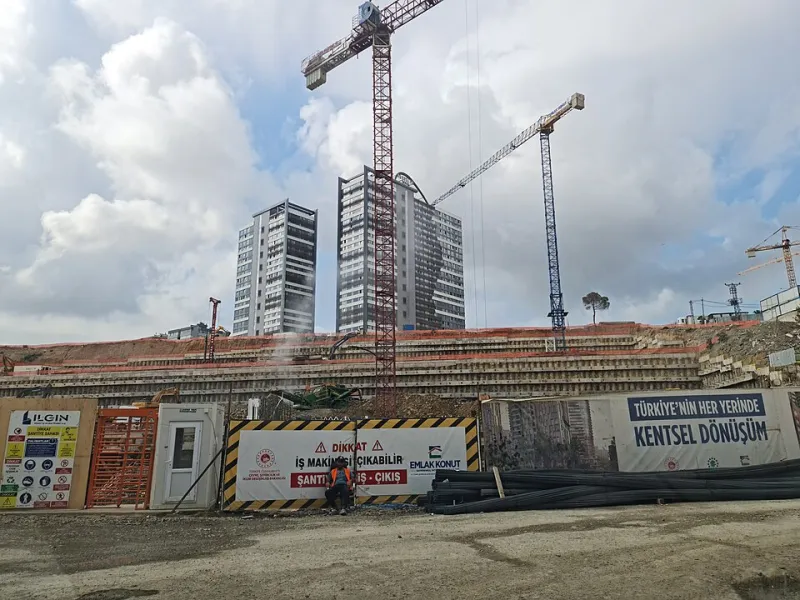
Photo: Sakaerka, CC BY 4.0, via Wikimedia Commons
US infrastructure programs are routinely described in the language of engineering: span lengths, cure times, utility conflicts, and crane picks. Yet some of the most consequential schedule constraints emerge from a different system altogether—the expectations of the communities that will live beside the work. A highway widening that must avoid school drop-off hours, a transit project that cannot run night crews near residential blocks, or a water treatment upgrade whose truck routes must avoid a historic main street all carry delivery risk that does not appear on a typical critical-path diagram. Treating community consent as a soft variable invites surprises. Treating it as a finite delivery resource forces the program to plan, price, and govern it.
From Stakeholder Engagement to Delivery Input
Community engagement is often managed as a communications function, measured by meetings held and flyers distributed. That framing is inadequate for large capital programs. Public hearings, municipal approvals, construction-impact agreements, and informal commitments made during outreach can create binding operating restrictions. They may determine when crews can work, which streets can be closed, how much noise or vibration is acceptable, and what notice must be given before a lane closure. Each of these commitments consumes time and flexibility.
For industry readers, the practical question is not whether community concerns are legitimate—they are—but whether the program has converted those concerns into schedulable activities with owners, durations, dependencies, and evidence requirements. When that conversion does not happen before bid day, contractors inherit an obligations set that was never priced. The result is predictable: claims, work-around costs, and delays that are blamed on construction means and methods when the real gap was a missing planning interface.
Building the Pre-Bid Social-License Register
The core tool is a social-license register, developed alongside the technical risk register and the permitting matrix. It should be started during conceptual planning and matured before the bid package is issued. The register is not a public-relations log. It is a delivery instrument with a consistent data structure.
At minimum, each entry should record the commitment or restriction, the public entity or stakeholder group that owns it, the trigger that activates it, the duration or calendar window it affects, the work activities it constrains, the evidence needed to demonstrate compliance, and the contingency available if the commitment cannot be met. A noise restriction, for example, should be linked to specific equipment and work hours, not merely described as a neighborhood concern. A business-access commitment should be tied to sidewalk closures and delivery schedules, not left as a general promise of coordination.
The register should also distinguish between commitments that are legally binding, politically expected, and informally assumed. That distinction matters at bid stage. Binding requirements belong in the base schedule and price. Politically expected commitments may warrant a defined allowance or a schedule contingency. Informal assumptions should be surfaced and resolved, not carried silently into construction.
Mapping Commitments to the Master Schedule
Once the register exists, the program can map each commitment to the master schedule. Hearing milestones become predecessor activities for demolition or early works. Noise windows become calendar constraints on night paving or pile driving. Haul-route agreements become logistics dependencies that interact with school calendars, emergency vehicle access, and local business hours. Construction-impact agreements may require notice periods, monitoring, and complaint-response protocols that consume staff time and create hold points.
This mapping should be visible in the bid documents. Contractors need to see which community commitments are fixed, which are negotiable, and which are still unresolved. A schedule that shows a bridge deck pour without showing the neighborhood notification and noise variance that must precede it is not a complete schedule. It is a technical sequence with a social blind spot.
Pricing the Commitment, Not Just the Concrete
Community commitments have cost. Temporary noise barriers, altered work hours, additional traffic control, vibration monitoring, business liaison staffing, and extended construction durations all carry price. When these items are scattered across general conditions or left to change orders, bid evaluation becomes distorted. A competitor that ignores community constraints can appear cheaper than a competitor that prices them honestly.
Owners can correct this by requiring a community-commitment schedule and a corresponding pricing schedule at bid stage. The goal is not to prescribe every local tactic but to make the obligations visible and comparable. If a restriction is expected to add six weeks to a critical activity, that duration belongs in the schedule basis. If a commitment requires a dedicated liaison and a monitoring program, those resources belong in the cost basis.
Governance After Award
The register must remain alive after contract execution. Community conditions change: a new mayor takes office, a neighborhood group reorganizes, a school alters its calendar, or a series of complaints triggers a stricter operating regime. Without change control, these shifts become informal side agreements that never reach the schedule.
A disciplined program assigns a single owner for the register, reviews it at every schedule update, and requires that any new community commitment pass through the same evaluation as a design change. The community liaison should have authority to escalate schedule impacts, not merely to record concerns. That is how consent becomes a managed delivery interface rather than an unpredictable external force.
A More Honest Critical Path
US megaprojects will continue to face opposition, negotiation, and local conditions that no engineering drawing can fully capture. The response should not be to treat community consent as an unavoidable cost of doing business. It should be to plan it with the same rigor applied to any other long-lead constraint. A pre-bid social-license register will not eliminate disagreement, but it will make the schedule more honest, the bid more comparable, and the delivery team better prepared for the obligations it has agreed to carry.