The Data Behind the Dashboard: Why US Digital Twins Stall in the Field

Digital twins have become a boardroom shorthand for modernization. The pitch is compelling: a virtual replica of a bridge, rail corridor, or water network that lets owners simulate maintenance, test scenarios, and spot problems before they become failures. In US infrastructure, the ambition is real. The results are uneven. Many programs discover that the twin is only as good as the field data feeding it—and that field data is often late, inconsistent, or disconnected from the people doing the work.
That is not a software problem alone. It is a delivery problem. Digital twins require a chain of custody from the field to the model: inspections, sensor readings, as-built records, material test results, and construction progress. When any link in that chain is weak, the twin becomes a polished dashboard that reflects yesterday’s assumptions rather than today’s condition.
The Twin Is a Mirror, Not a Model
A useful digital twin mirrors the asset and its operating context. It does not replace engineering judgment. It gives engineers and operators a shared reference for decisions: where to send an inspection crew, which pump is under stress, which bridge repair can wait. That shared reference depends on timestamps, location data, asset identifiers, and consistent definitions. Without those, the twin cannot distinguish between a real trend and a data-entry artifact.
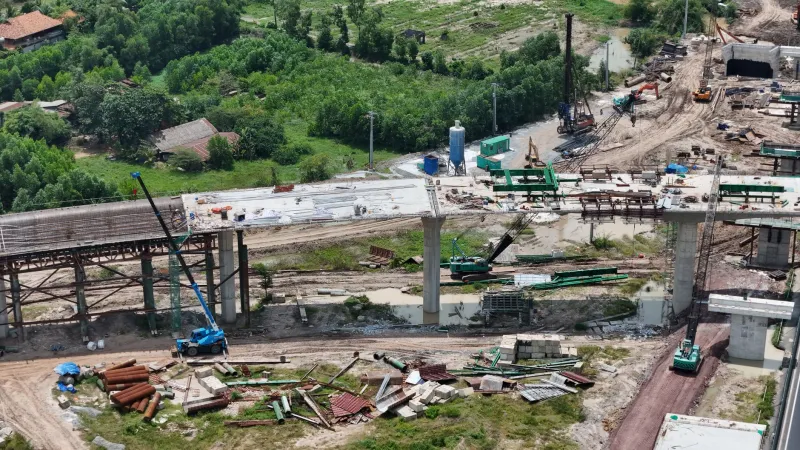
US owners often begin with a technology pilot. A vendor demonstrates a 3D model, a sensor dashboard, or an analytics layer. The pilot impresses. Then it meets the field. Crews use different forms. Contractors submit PDFs. Inspectors record notes in a system that does not talk to the asset register. The twin’s model is updated monthly, while construction changes daily. The result is a credibility gap that grows with every change order.
Where US Programs Lose the Thread
The first failure point is timing. Field data collected after the fact is useful for records, not for decisions. If a twin is meant to support construction sequencing or maintenance planning, data must arrive at the frequency the decision requires. That may be daily for active construction, weekly for inspections, or continuous for sensors. Owners should specify data latency as a requirement, not assume it.
The second failure point is consistency. Asset identifiers, units, coordinate systems, and inspection codes must be agreed before data collection begins. In US programs, this is complicated by multiple jurisdictions, legacy systems, and contractor-specific workflows. A bridge may have one identifier in the asset management system, another in the construction contract, and a third in the inspection app. The twin cannot reconcile them without a governance layer.
The third failure point is workflow. If field crews see the twin as a reporting burden, they will comply minimally. If they see it as a tool that reduces rework or answers their questions, adoption improves. The difference is design. A twin that requires duplicate entry will fail. A twin that accepts data from the tools crews already use has a chance.
Interoperability Is a Governance Problem
Interoperability is often framed as a technical standard issue. It is also a governance issue. Who owns the data? Who approves schema changes? Who resolves conflicts between as-built records and field observations? Who is accountable for data quality? Without clear answers, interoperability becomes a series of one-off integrations that are expensive to maintain.
US owners can borrow from program delivery practice: treat data as an asset with a lifecycle. Define a data governance charter for the twin. Assign an owner for each data domain. Set quality thresholds. Establish a change control process. Require contractors to deliver data in specified formats at specified milestones. These are contractual and management decisions, not just IT decisions.
The Front Line Decides
The most sophisticated twin will fail if the front line does not trust it. Trust comes from usefulness and transparency. Field crews need to see that their input changes decisions. Inspectors need to know that a flagged defect will be routed to someone who acts. Contractors need clarity on what data they must provide and why. Training must be role-based, not a generic module.
Owners should also resist the temptation to measure success by model completeness. A twin that covers 100 percent of assets but is updated quarterly may be less useful than a twin that covers critical assets and is updated daily. Scope the twin to the decisions it must support.
A Practical Checklist for Owners
- Define the decisions the twin must improve before selecting technology.
- Specify data latency, format, and quality thresholds in procurement documents.
- Establish a single asset identifier strategy across design, construction, and operations.
- Assign data ownership and change control to named roles.
- Integrate with field tools rather than creating parallel reporting.
- Pilot on a critical asset class with a clear operational decision.
- Measure adoption and decision impact, not just model detail.
- Budget for data stewardship after the pilot ends.
The Reality Check
Digital twins can improve US infrastructure decisions. They can help owners prioritize maintenance, reduce inspection waste, and test resilience scenarios. But they cannot substitute for field discipline. The twin is a mirror. If the field data is late, inconsistent, or disconnected, the mirror will show a distorted asset.
In 2026, the test for US owners is practical: can the twin answer a field question faster than the existing process? If not, the program is not ready for scale. The technology is not the bottleneck. The data chain is. Build that first, and the twin has a reason to exist beyond the board presentation.