Before the Funding Clock Runs Out: A Risk-Tiered Approach to US Bridge Replacement
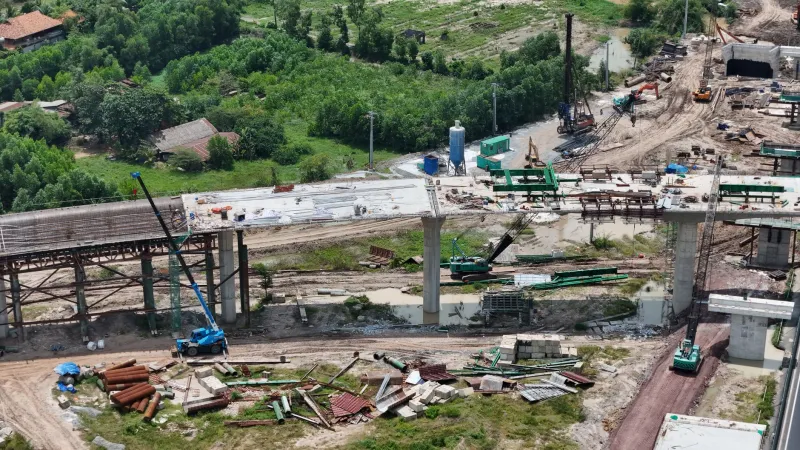
US infrastructure owners are entering a busy replacement cycle. Federal and state programs are pushing agencies to obligate funds, local match dollars are being assembled, and bridge and transit replacement projects that once sat on the distant edge of the capital plan are suddenly moving into procurement. The urgency is understandable. Many structures have carried traffic well beyond their design lives, and deferred maintenance has become a visible performance problem rather than a spreadsheet concern.
Yet urgency has a way of becoming its own risk. When schedules are set by funding deadlines rather than by a disciplined assessment of need, agencies can end up replacing the easiest projects first, the most politically visible projects second, and the most consequential projects whenever the calendar allows. That is how an old maintenance backlog becomes a new construction backlog: a pipeline of projects that are funded, underway, and poorly sequenced.
The Next Backlog Is Being Built Today
The replacement wave now taking shape across US bridges and transit assets is not simply a construction challenge. It is a portfolio challenge. Owners must decide which structures to replace, which to rehabilitate, which to preserve, and which to monitor—and in what order. Those decisions have to survive changes in leadership, funding cycles, and construction-market conditions.
A risk-tiered playbook does not slow delivery. It makes delivery defensible. It gives owners a way to explain why a bridge in one corridor moves ahead of a bridge in another, and why a lower-cost rehabilitation may be the better public investment than a full replacement. It also gives contractors and program managers a clearer picture of what is genuinely urgent versus what is merely eligible for funding.
Why Condition Ratings Alone Are Not Enough
Bridge condition data is necessary, but it is not a sequencing strategy. National Bridge Inventory ratings, element-level inspections, and transit asset condition scores provide a useful baseline, but they can flatten important differences. A structurally deficient bridge on a lightly traveled local road is not the same public-risk proposition as a bridge of similar condition on a primary evacuation route, a freight corridor, or a transit-dependent connection.
Condition data also has a timing problem. Inspections are snapshots. A bridge rated in fair condition today may deteriorate quickly under increased truck traffic, winter salting, or scour risk. Conversely, a bridge with a poor rating may already have interim measures in place that reduce near-term risk. Owners need to combine condition with exposure, redundancy, and consequence.
A Four-Tier Replacement Framework
A practical framework can be organized into four tiers. The tiers are not rigid labels; they are decision aids that help owners compare projects on a consistent basis.
Tier 1: Critical and time-bound. These are structures or transit assets with significant structural risk, limited redundancy, and high corridor criticality. A closure would disrupt emergency response, freight movement, or access to essential services. Tier 1 projects should move first, but they still need a delivery strategy that accounts for utilities, right-of-way, environmental clearance, and construction-market capacity.
Tier 2: Strategic and condition-driven. These assets are not in immediate distress, but their condition is declining and their corridors carry substantial regional weight. Tier 2 is where lifecycle cost analysis matters most. A rehabilitation may extend service life at a fraction of replacement cost, or a replacement may be justified by long-term savings and resilience benefits. The framework should require a documented comparison rather than an assumption.
Tier 3: Opportunistic and bundled. These projects can be packaged with adjacent work to reduce mobilization costs, traffic disruption, and procurement overhead. Bundling is not a substitute for prioritization, but it can improve value when projects share geography, utilities, or staging areas. Tier 3 projects should be sequenced around Tier 1 and Tier 2 work, not allowed to crowd them out.
Tier 4: Monitor and preserve. Some assets are best managed through targeted preservation, enhanced inspection, load restrictions, or monitoring technology. Tier 4 is not a parking lot for difficult decisions. It is an active management category with defined triggers for reassessment.
Lifecycle Cost as a Sequencing Tool
Replacement decisions are often framed around capital cost, but the more useful comparison is lifecycle cost. That includes design, construction, maintenance, inspection, rehabilitation, and eventual replacement. It also includes user costs: detours, freight delays, transit service changes, and the economic effect of reduced access.
A lifecycle approach can reveal that a modest rehabilitation now avoids a much larger replacement later, or that a higher initial capital cost buys a structure with lower maintenance demands and greater resilience. It can also expose the hidden cost of sequencing projects by funding deadline alone. A project rushed into construction without adequate utility coordination or geotechnical investigation may appear cheaper on bid day but cost more over its service life.
Making the Framework Stick
The framework only works if it is embedded in governance. That means a standing prioritization committee with engineering, planning, finance, and operations representation. It means data standards that allow condition, criticality, and cost to be compared across asset classes. It means scenario planning that tests the pipeline against different funding levels and construction-market conditions.
It also means procurement discipline. Owners should avoid letting a single funding stream dictate project scope or sequence. Where possible, they should package work in a way that attracts competitive interest without creating dependencies that make the program fragile. And they should build in regular reassessment points, because a bridge that is Tier 3 today may become Tier 1 after a flood, a fire, or a sudden change in traffic patterns.
The replacement bubble is not inevitable. It is a choice made project by project, deadline by deadline. Owners who adopt a risk-tiered approach can move quickly without losing control of the sequence—and can demonstrate that the next backlog is not being built in the name of clearing the last one.