Before the First Trench: Making Utility Risk a First-Class Schedule Variable

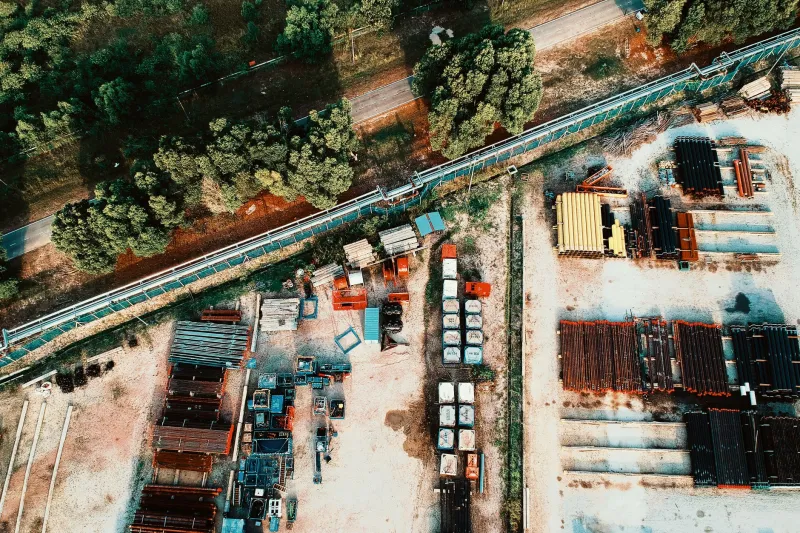
Photo by Photo by Erik Esly on Unsplash on Unsplash
On many US transportation, water, and energy programs, the first serious schedule surprise does not arrive with steel or concrete. It arrives when a trench is opened and a conflict appears that no drawing anticipated. A fiber line sits six inches from a proposed footing. A legacy storm drain crosses the alignment at an elevation that was never surveyed. A utility owner cannot review a relocation package for another ninety days because the request entered its capital queue without a sponsor.
These are not isolated field problems. They are schedule-modeling failures. Utility relocation is often managed as a permitting formality until a conflict emerges, at which point it becomes the critical path. For programs entering 2026 under tight funding and public scrutiny, that sequence is no longer defensible. Below-grade risk must be elevated into the primary delivery model, with data quality, decision rights, and contingency treated as seriously as steel procurement or bridge fabrication.
The Schedule Fiction of the Utility Allowance
Most bid schedules include a utility allowance. It may be a lump-sum duration for relocation, a line item for coordination, or an assumption that utility owners will respond within a standard review window. The allowance is rarely tied to verified data. It survives because it is familiar, not because it is accurate.
Utility owners operate on their own capital cycles, staffing constraints, and approval hierarchies. A municipal water department may need board approval for a relocation design. A private telecommunications provider may need to verify asset ownership across multiple legacy systems. A state DOT may control the right-of-way while a local utility controls the duct bank. Each handoff introduces a decision point that the construction schedule often does not show.
The result is a schedule that looks complete at the boardroom level and breaks at the field level. The contractor mobilizes, discovers a conflict, submits a request for information, and waits. The owner absorbs delay. The utility owner is blamed for a process that was never resourced to meet the program's assumptions. By then, the most valuable window for mitigation has closed.
From 811 Ticket to Risk Register
A One Call or 811 ticket is a damage-prevention tool, not an engineering product. It marks the approximate location of subsurface utilities. It does not establish depth, material, condition, ownership, or constructability. Programs that treat marking as sufficient due diligence are accepting a level of uncertainty that belongs in the risk register, not in the baseline schedule.
Subsurface utility engineering, or SUE, provides a more defensible foundation. Using the quality levels defined in ASCE 38-22, a program can distinguish between records-only information and verified location data. Quality Level D and C data may be adequate for early corridor screening. Quality Level B and A data are more appropriate where relocation decisions, deep excavations, or dense urban conflicts are expected. The quality level should be recorded, scheduled, and budgeted, not assumed.
The practical shift is to convert utility information into a schedule variable. Each identified conflict should carry a data quality rating, an owner, an approval path, and a range of relocation durations. The schedule model should show utility relocation activities as predecessors to construction, not as parallel coordination tasks. Where data quality is low, the schedule should show a larger contingency and a decision gate before the contractor is committed to the work face.
Early Contractor Involvement Without Transferring Unknowable Risk
Early contractor involvement can be valuable in utility-intensive corridors. A pre-construction services contractor can review conflict density, validate constructability, propose temporary relocation sequences, and identify where utility owner approvals are likely to bottleneck. That input is most useful before the final design is frozen and before the bid schedule is set.
However, early involvement is not a substitute for owner-side data. Asking a contractor to carry unidentified utility risk is not risk transfer; it is risk deferral. The contractor will price the uncertainty, decline the work, or discover the conflict after mobilization. None of those outcomes protects the program.
A more durable model pairs early contractor involvement with a utility risk ownership matrix. The owner owns right-of-way and utility agreements. The designer owns the quality of record information and conflict analysis. The utility owner owns relocation design approvals and outage windows. The contractor owns means and methods around known conflicts. Each party should see its obligations in the schedule model, with milestones that trigger escalation when they slip.
A Field-to-Boardroom Framework
Programs can use a practical sequence to bring utility risk under control before mobilization.
First, audit the baseline data. Identify which utility records are current, which are estimated, and which are missing. Assign a SUE quality level to each corridor segment and critical excavation area.
Second, build a conflict density map. Plot known utilities against proposed construction. Rank conflicts by proximity, depth, ownership complexity, and relocation duration. The map should be readable by both field staff and executives.
Third, formalize utility owner engagement. Establish a calendar of design reviews, approval milestones, and outage windows. Where possible, execute relocation agreements before the construction contract is awarded. These agreements should name decision-makers, funding responsibilities, and review durations.
Fourth, integrate utility activities into the schedule model. Show relocation design, permitting, construction, inspection, and energization or commissioning as linked activities. Add buffers at decision points rather than at the end of the project.
Fifth, tie contingency to data quality. A corridor with Quality Level D records should not carry the same contingency as a corridor with Quality Level A verification. The basis of contingency should be documented and reviewed as data improves.
Sixth, establish a governance cadence. Utility risk should appear in the same monthly review as cost, schedule, and safety. Triggers should be explicit: a missed utility owner review, a newly discovered conflict, or a change in relocation scope should prompt a documented response.
What Boards Should Ask
Executives do not need to inspect every trench. They do need to ask whether the schedule is built on verified information. Which utilities sit on the critical path? What quality level supports the relocation durations? Who owns each approval, and has that owner accepted the milestone? Is the contingency tied to data gaps or to general optimism? Are relocation agreements executed, or merely discussed?
At Saudi Binladin Group, we view large-scale infrastructure delivery as an exercise in sequencing certainty. The surface work is visible, but the schedule is often decided below grade. For US programs in 2026, the lesson is straightforward: utility relocation is not a paperwork phase. It is an engineering and governance discipline. Programs that model it early will mobilize with fewer surprises. Programs that do not will continue to discover their schedules one trench at a time.