Energization Is the New Topping Out: Sequencing US Data Center Work Around Late Power
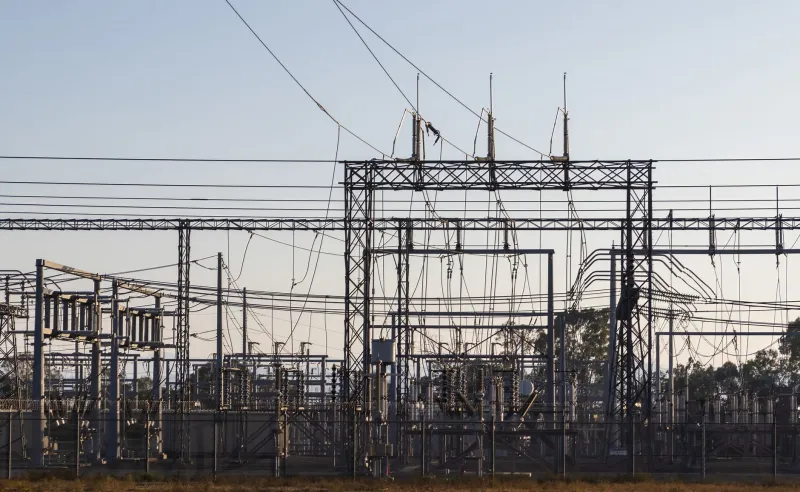
The shell is closed. The mechanical rooms are set, the racks are staged in the laydown yard, and the commissioning agent has been on site for three weeks. And the building still cannot take load, because the substation that will serve it has not been energized and the utility's own construction calendar has not yet come around to this address.
That scene is no longer an exception on US projects. Across Northern Virginia, the Texas Triangle, metro Atlanta, central Ohio, and the Salt Lake corridor, data center and advanced manufacturing owners are learning that the longest pole in the tent is frequently a transformer, a breaker, or a utility work crew — not a trade contractor. In 2026, on many of these campuses, the milestone that actually governs revenue is energization.
The Queue Has Become the Critical Path
The evidence is not anecdotal. Grid interconnection queues in the United States have swollen into the hundreds of gigawatts over the past several years, and federal regulators have spent that time trying to make the study process move faster. Even where reforms take hold, the physical supply chain — large power transformers, high-voltage circuit breakers, medium-voltage switchgear — has stretched procurement cycles well beyond historical norms. Utilities in several regions now publish lead times that would have been unthinkable a decade ago.
For a program manager, the implication is straightforward and uncomfortable: a data center schedule built around structural steel and fit-out sequencing is measuring the wrong constraint. The electrical interconnection agreement, the utility's system impact study, and the delivery date on owner-furnished electrical equipment deserve the same primacy in the master schedule that steel erection once held.
Engage the Utility as a Design Partner, Not a Permitting Counter
The most effective teams we observe begin utility engagement before the site is fully controlled — sometimes before the design is much more than a load estimate and a one-line diagram. Early conversations accomplish several things that cannot be recovered later: they reveal whether the requested capacity is realistically available at that point on the system, they expose the utility's own internal capital plan for the feeder or substation in question, and they open the door to staging options that would otherwise never be offered.
Practically, that means coming to the table with a defensible load profile, a clear picture of redundancy requirements, and a willingness to accept service in increments. An owner who asks for 300 megawatts on a single date is asking the utility for a project. An owner who asks for 100 megawatts in the first quarter of operations, 100 more six months later, and the balance the following year is often asking for something the system can actually deliver.
Modular Substations and the Customer-Side Boundary
One of the more useful levers is the deliberate relocation of scope. Where the utility's own substation delivery is the constraint, project teams can sometimes take responsibility for a larger share of the electrical infrastructure on the customer side of the meter — a modular substation or an electrical house fabricated off site and set on a foundation while the utility completes its work. These packages compress field labor, move risk into a controlled factory environment, and can be commissioned in parallel with civil and structural work.
None of this eliminates the utility's scope, and it should not be presented to an owner as though it does. What it buys is time and optionality: equipment that can be ordered, fabricated, and tested while the interconnection process grinds forward, so that the moment service is available the balance of plant is ready to accept it.
Load Blocks and Staged Commissioning
The schedule logic that follows from late power is incremental. Rather than designing a single energization date and a single commissioning window, mature programs define load blocks — 20 or 30 megawatts at a time — each with its own acceptance criteria, its own testing sequence, and its own contractual milestone. Early blocks may be served from temporary or construction power, or from an on-site generation source, allowing chillers, pumps, and control systems to be proven before the utility feed arrives.
This approach also improves the quality of the handover. Commissioning that is compressed into a single frantic window at the end of a program tends to produce findings that no one has time to resolve. Commissioning that is spread across several energization events produces a punch list that the team can actually close.
Contracts That Assign the Risk Honestly
Where power is the constraint, contract structure matters as much as technical strategy. Owners should be explicit about who carries which portion of delay risk, particularly where a utility's performance is outside either party's control. Liquidated damages provisions that ignore interconnection uncertainty tend to be priced into bids rather than absorbed by contractors, which means the owner pays for the risk either way — just less visibly.
Useful provisions include clear definitions of utility-caused delay, allowances for long-lead electrical equipment with documented escalation, early procurement authorizations that let the contractor place orders before full design release, and shared-float conventions that prevent one party from consuming time the other needs.
Questions Worth Asking Before Mobilization
- Is the interconnection agreement executed, and does its in-service date appear in the master schedule as a hard milestone?
- Which electrical equipment is owner-furnished, and what is the current committed delivery date with liquidated damages attached?
- Has the utility confirmed its own substation and feeder construction schedule in writing, and is that confirmation recent?
- Can the facility accept service in blocks, and has commissioning been sequenced accordingly?
- What is the fallback if energization slips by two quarters — temporary generation, phased occupancy, or a renegotiated handover?
None of these questions is exotic. What is unusual is treating their answers as schedule-driving rather than administrative. That shift in emphasis is the substance of power procurement as a delivery discipline, and on US data center programs in 2026 it is likely to matter more than any single construction trade.
The industry still celebrates structural topping out, and it should. But the ceremony that matters to an owner's balance sheet is the one where the breaker closes and the meters begin to turn.